
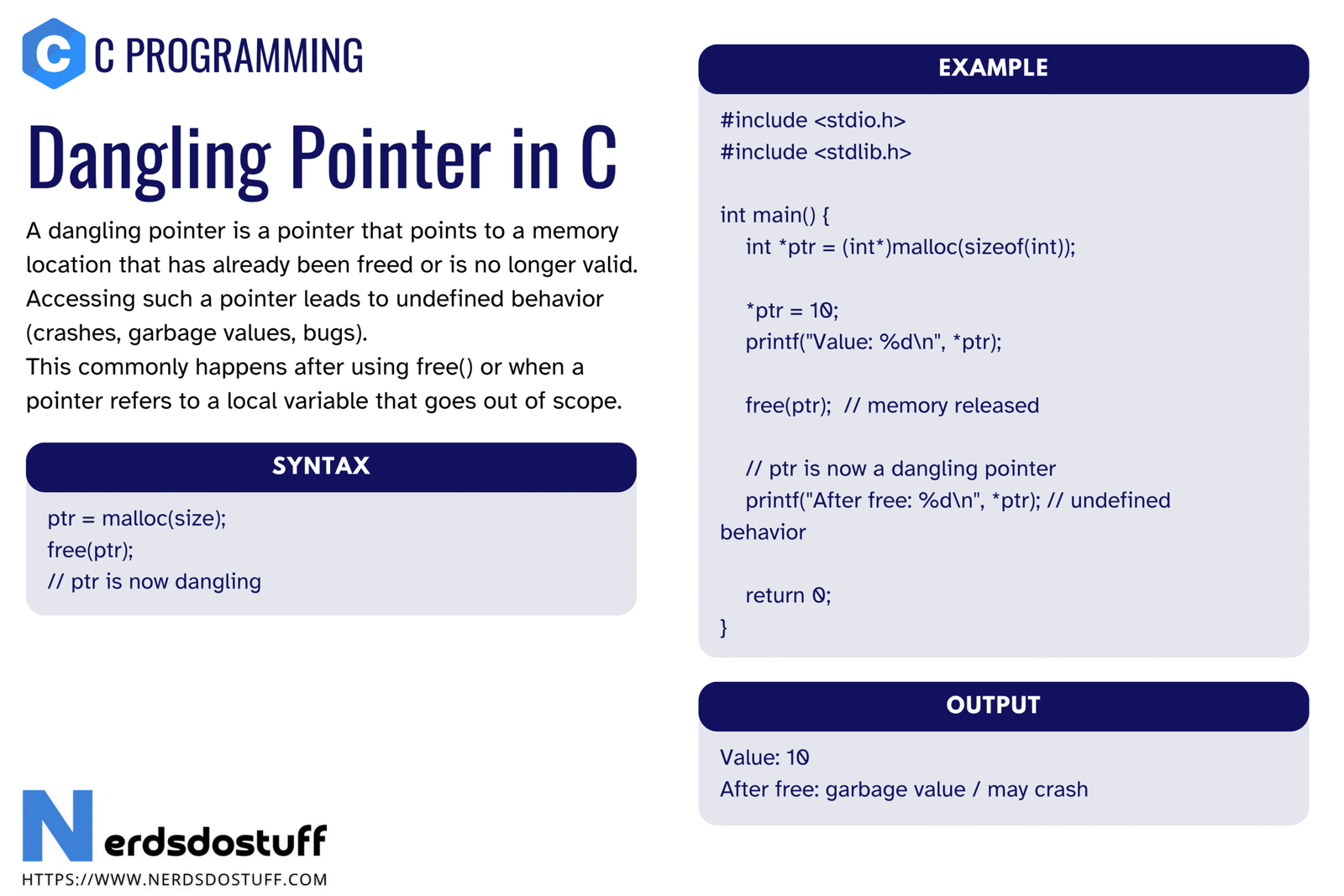
A dangling pointer in C is a pointer that refers to a memory location which is no longer valid. The pointer still holds an address, but the data at that address should no longer be accessed because the object has already gone out of scope, been freed, or become invalid in some other way.
This is one of the most dangerous pointer-related problems in C because the pointer may look normal even though using it can lead to undefined behavior, crashes, data corruption, or difficult debugging problems. In this article, we will understand what a dangling pointer in C is, how it is created, why it is dangerous, common examples, and how to avoid it in real programs.
What is Dangling Pointer in C?
A dangling pointer in C is a pointer that points to memory that is no longer valid for use. The pointer itself still exists, but the object it used to point to is gone or invalid.
This means the pointer is no longer safe to dereference.
A dangling pointer is not necessarily NULL. It often contains an old address that looks valid but should not be used anymore.
Why Dangling Pointer is Dangerous in C
- it can cause undefined behavior
- it may crash the program during dereferencing
- it can silently corrupt data
- it can make bugs hard to reproduce and debug
- it creates serious reliability and security risks
That is why dangling pointers are treated as a major bug category in C programming.
How Dangling Pointer is Created in C
A dangling pointer usually appears in one of these situations:
- after freeing dynamically allocated memory
- after returning the address of a local variable from a function
- after a variable goes out of scope while its address is still stored somewhere
These are the most common cases beginners and even experienced programmers face.
Dangling Pointer After free() in C
One of the most common causes of dangling pointers is freeing heap memory and then continuing to use the old pointer.
#include <stdio.h>
#include <stdlib.h>
int main(void)
{
    int *ptr = (int *)malloc(sizeof(int));
    *ptr = 25;
    free(ptr);
    /* ptr is now dangling */
    printf("%d\n", *ptr);
    return 0;
}
After free(ptr), the memory is released. The pointer still contains the old address, but dereferencing it is unsafe and invalid.
Dangling Pointer by Returning Address of Local Variable
Another very common cause is returning the address of a local variable from a function.
int *getValue(void)
{
    int x = 10;
    return &x;
}
This is wrong because x is a local variable. It stops existing after the function returns. So the returned pointer becomes dangling immediately.
Dangling Pointer Due to Scope Ending in C
A pointer can also become dangling when it points to a variable that goes out of scope.
#include <stdio.h>
int main(void)
{
    int *ptr;
    {
        int x = 50;
        ptr = &x;
    }
    /* x is out of scope here */
    printf("%d\n", *ptr);
    return 0;
}
Once the inner block ends, x no longer exists as a valid local object for use in that way, so ptr becomes dangling.
Difference Between Dangling Pointer and Null Pointer in C
Beginners often confuse dangling pointers and null pointers, but they are not the same.
| Point | Dangling pointer | Null pointer |
|---|---|---|
| Meaning | Points to invalid or expired memory | Points to no valid object intentionally |
| Value | Usually holds an old address | Has the special null value |
| Risk | Very dangerous because it may look valid | Safer to detect if checked properly |
A null pointer is deliberately set to represent ?no object.? A dangling pointer is a broken reference to something that used to exist.
Example of Safe Practice After free() in C
A common good practice is to set the pointer to NULL after freeing it.
#include <stdlib.h>
int *ptr = (int *)malloc(sizeof(int));
free(ptr);
ptr = NULL;
This does not recover the freed memory, but it prevents accidental use of the old invalid address through that pointer variable.
How to Avoid Dangling Pointers in C
- set pointers to
NULLafterfree()when practical - never return the address of a local variable
- be careful with block scope and object lifetime
- do not dereference pointers after memory has been released
- design ownership of dynamically allocated memory clearly
- use tools and compiler warnings to help catch lifetime errors
The most important concept here is lifetime. Every pointer should be used only while the object it points to is still valid.
Common Symptoms of Dangling Pointer Bugs in C
- random crashes
- unexpected values when dereferencing
- program works sometimes and fails other times
- corrupted memory or corrupted output
- hard-to-trace runtime errors
Dangling pointer bugs are often difficult because the program may appear to work for some runs and fail for others.
Advantages of Understanding Dangling Pointers in C
- improves memory safety awareness
- helps write more reliable pointer code
- reduces crashes and undefined behavior
- builds stronger understanding of object lifetime in C
Common Mistakes That Lead to Dangling Pointer in C
- using a pointer after
free() - returning a pointer to a local variable
- keeping an address of a variable whose scope has ended
- assuming an old address is still safe because it looks unchanged
| Mistake | Why it is unsafe | Safer practice |
|---|---|---|
Use after free() | Memory is already released | Set pointer to NULL and stop using it |
| Return local address | Local variable dies after function returns | Return value normally or allocate valid memory |
| Keep address after scope ends | Object lifetime is over | Use pointer only while object is alive |
Best Practices to Prevent Dangling Pointer in C
- Understand object lifetime clearly.
- Reset pointers after freeing memory where appropriate.
- Prefer clear ownership rules for dynamic memory.
- Do not store addresses of short-lived objects beyond their scope.
- Review pointer code carefully during debugging and code review.
FAQs
What is dangling pointer in C?
A dangling pointer in C is a pointer that refers to memory which is no longer valid for use.
How is a dangling pointer created in C?
It is commonly created after free(), after returning the address of a local variable, or after an object goes out of scope.
Why is dangling pointer dangerous in C?
Because dereferencing it can cause undefined behavior, crashes, data corruption, and difficult debugging problems.
What is the difference between dangling pointer and null pointer?
A dangling pointer refers to invalid old memory, while a null pointer is intentionally set to represent no valid object.
How can we avoid dangling pointers in C?
Avoid using pointers after free(), do not return local addresses, watch variable scope, and set pointers to NULL when appropriate.
Can a dangling pointer be NULL automatically?
No. A dangling pointer usually still holds an old address unless you explicitly reset it.
Continue learning C in order
Follow the topic sequence with the previous and next lesson.